
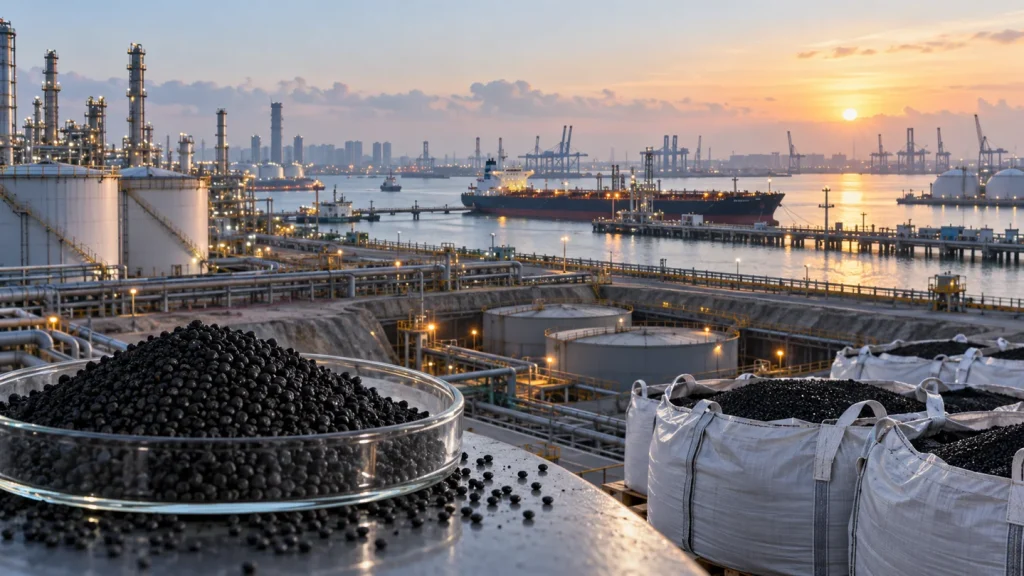
Saudi Arabia intends to store crude oil in Singapore’s Jurong Rock Caverns from the second half of 2027, Reuters reported on 26 October 2026. Aramco, Singapore’s Energy Market Authority and JTC signed a memorandum of understanding. The underground facility has capacity for 1.47 million cubic metres of liquid hydrocarbons, according to the report.
Why the storage plan matters for industrial supply
The announcement concerns crude storage and regional energy security. It does not announce a carbon black plant, direct feedstock deliveries to a furnace-black producer or a change in today’s pigment price. Its relevance is indirect: Asian refiners, petrochemical operations and logistics networks depend on reliable hydrocarbon supply. Storage can provide flexibility when routes or delivery schedules are disrupted.
For N330 and N550 buyers, this belongs on a longer-term supply watchlist. Ask suppliers about feedstock origin, alternative routes and lead times rather than assuming the project already reduces product costs. Specifications and end-use trials remain decisive. Gohar Farayand’s traded N550 carbon black and produced P-70 black pigment meet different formulation needs. They should not be interchanged solely because of an oil-market development.
The second-half-2027 timetable is also important. The implementation schedule and commercial arrangements need monitoring before conclusions can be drawn about inventories, regional premiums or delivered carbon black offers. The reported facility capacity is a storage figure, not carbon black production capacity.
Analysis
Strategic storage may improve flexibility for Asia’s wider hydrocarbon chain over time. The effect on carbon black prices remains unproven. Supplier diversification, clear specifications and current delivery quotations offer more immediate value to buyers than treating a future storage agreement as a present price signal.