
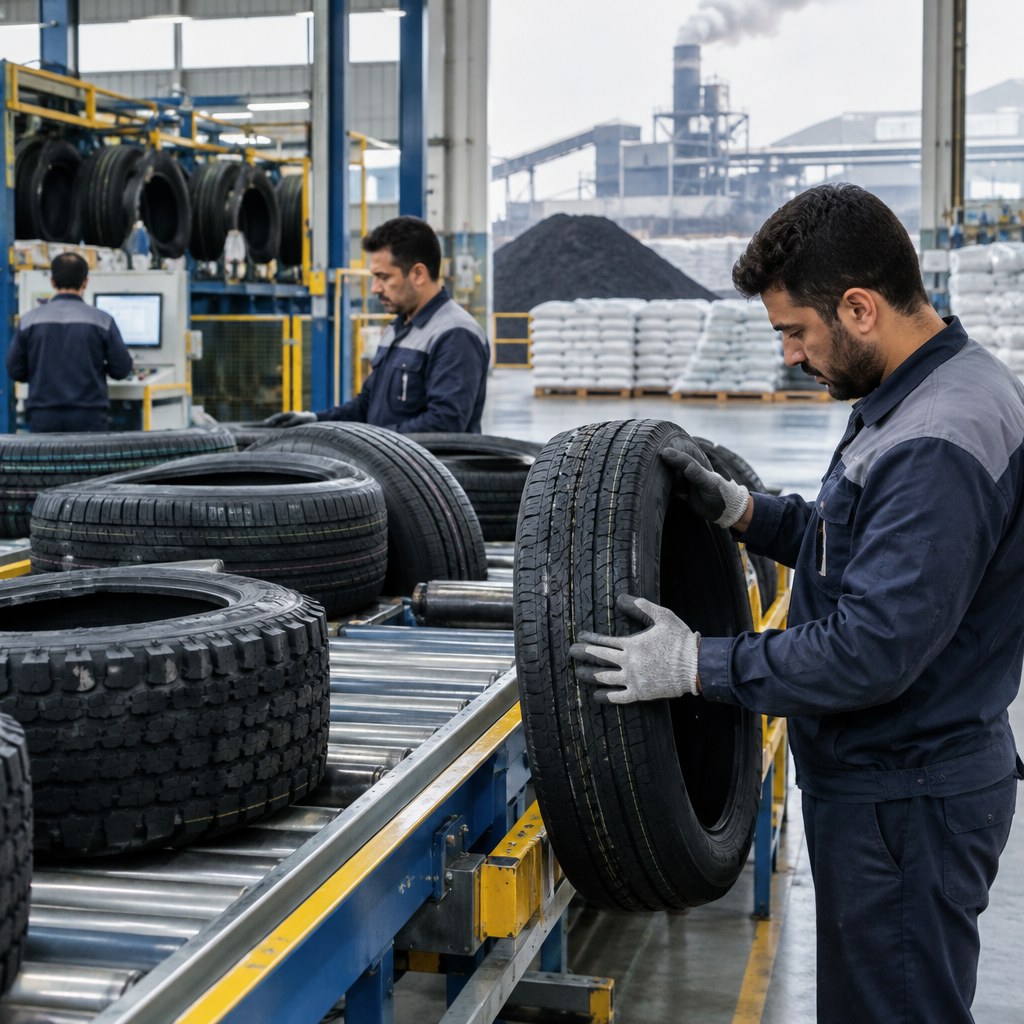
Iran Tire Manufacturing Company has announced an average 23% increase in the selling price of its radial tyres, effective 17 October 2026. According to a Bourse24 report based on the company’s Codal disclosure, the adjustment responds to higher input costs and a rising cost of production. The new prices have also been registered in Iran’s official consumer-protection pricing system.
The development matters to the carbon black market because radial tyres are among the largest consumers of reinforcing furnace-black grades. Carbon black works alongside natural and synthetic rubber, process oils and steel cord to improve abrasion resistance, strength and service life. A rise in tyre prices does not automatically prove that carbon black prices have increased by the same amount, but it does show that cost pressure is moving through the downstream value chain.
Radial tyres represented about 70% of Iran Tire’s revenue in the previous financial year. The price adjustment is therefore material for sales, although the final impact on profitability will depend on volumes, product mix and whether raw-material costs continue to rise.
Analysis of this news
For carbon black producers and industrial buyers, the key signal is that the tyre market is beginning to pass part of its higher production cost into finished-product prices. That may strengthen suppliers’ negotiating position, but it can also make customers more price-sensitive and lead to shorter purchasing cycles or tighter inventory control.
Buyers should compare more than the quoted price per kilogram. Dispersion, grade consistency, scrap reduction and reliable delivery all affect the real cost of a tyre or rubber compound. In an inflationary environment, a small quality variation can cost more through rework and lost output than the nominal difference in raw-material price.
Source: Bourse24, 17 October 2026, reporting Iran Tire’s Codal disclosure.