
Today’s review, dated 17 October 2026, looks at Iran Carbon’s domestic carbon black business. Petrochemiha reported on 3 October that the company recorded first-half revenue of about 2,312 billion tomans, approximately 65% higher year on year. These are figures for the period ending in Shahrivar 1405, rather than an announcement of a sales jump occurring today.
Reading sales figures alongside pigment requirements
The report puts Shahrivar revenue at roughly 535 billion tomans, up around 107% year on year, including approximately 359 billion tomans from domestic industrial carbon black sales. A producer’s revenue is a monetary measure. It does not, on its own, demonstrate industry-wide volume growth, a general shortage or identical price movements across every carbon black grade.
For procurement teams, the useful distinction is between revenue, tonnes sold and the price per tonne. Changes in selling prices, product mix and shipment volumes can all affect the headline number. Detailed operating data are needed to separate them. The report therefore cannot establish whether a particular pigment grade has become easier or harder for a coatings or masterbatch manufacturer to secure.
Application requirements remain central to black pigment purchasing. Buyers should compare undertone, tint strength, dispersion behaviour and compatibility with their own resin or carrier. An approved sample, batch documentation and reliable delivery arrangements provide a firmer basis for supplier comparison than a broad revenue headline. Freight, packaging and payment terms should also be included when comparing the delivered cost of otherwise similar offers. These are procurement considerations, rather than additional performance claims about the producer.
Analysis of this news
Iran Carbon’s revenue growth is a reason to monitor the market, but it does not establish an impending black pigment price surge. Buyers in Iran and neighbouring markets should continue to base orders on the required grade, sample testing, deliverable stock and total supply cost.
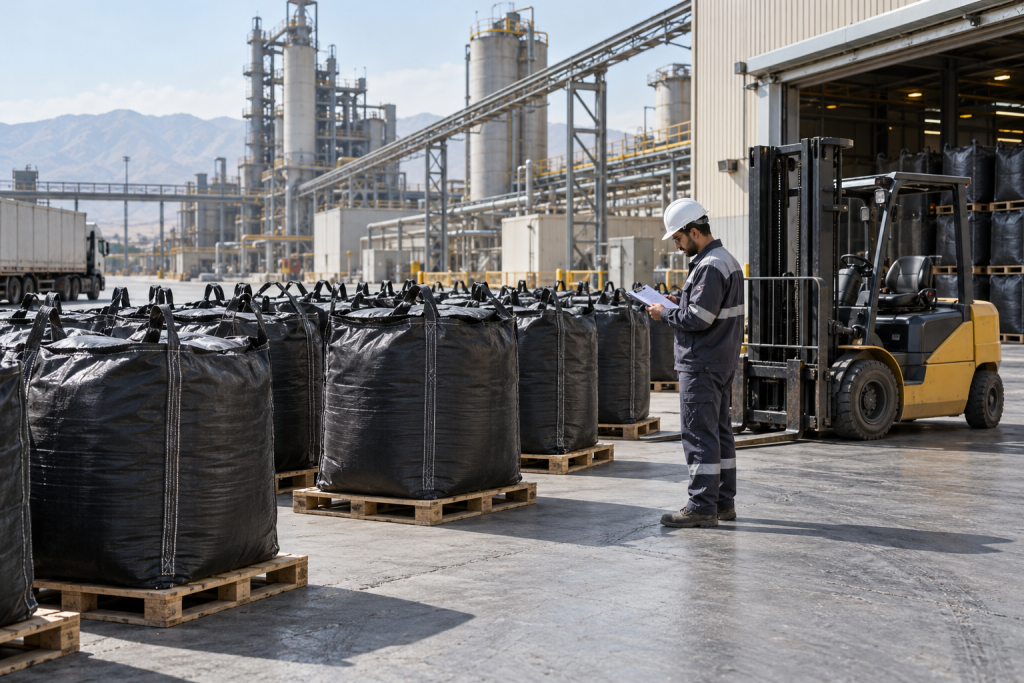
Conceptual AI-generated illustration; not a documentary photograph of a company or research site.